

I always recommend building a solid foundation if you want to earn serious affiliate money. In my opinion, an affiliate website is the best foundation an affiliate can have to make money — and you'll see why in a moment.
And I don't mean it because of SEO hype — an affiliate website can actually be very successful even if it gets zero visitors from search engines. But that's only possible if it's built and marketed the right way.
Especially beginners want to see results as quickly as possible, so they often go for strategies that are exclusively designed for fast cash. But those rarely help you build something with substance.
We have all seen affiliate links come and go. Do you remember the blog comments filled with links to cash systems, casino scams, and weight-loss pills? Yes, it was all real, and the blog owners needed to clean the dishes.
It's much better to invest more time into the marketing strategy and build an valuiable affiliate website to create a sustainable and stable income.
And don't get me wrong; there are good and bad affiliate websites. I'm talking about valuable ones that inform, guide, and help buyers make better purchasing decisions. Those are the ones that buyers are happy to find, not the spammy ones that throw affiliate products around like pancakes.
Why that's the smarter move is what this article is all about.
Why build a useful affiliate website?
Let's start with the benefits of having an affiliate website. I've been building websites since 2006 or 2007. It was a long time ago when I built the first one. It was just a collection of resources, a hobby project. I spent more than a week working on it, and I was proud of it.
It's a good feeling to own a website, especially when you consider its benefits for an online business. The following points clearly show why it's worth it for any affiliate.
- 100% control — as an affiliate, you ideally want full control over the platform you use to earn money. With your own website, you've got that.
- Profitability almost guaranteed — every affiliate and niche site I've built over the years at least covered hosting costs and usually made good profit.
- Earn more money — since you can tweak everything on your site to boost income, you'll earn more as an affiliate using a website.
- More stable long-term income — I don't know a better platform for building long-term stable income than your own affiliate or niche site.
- Best long-term strategy — I haven't found a better strategy that gives affiliates more security and longevity than having their own site.
As you can see, building an affiliate website is a long-term strategy for making money. That's what sets a pro affiliate apart — they want a sustainable income, and they're not worried about the time or effort it takes.
They know that one day, all the effort will pay off. This is a common belief pattern in any business, as you never truly know when — or even if — you will achieve the success that motivated you to start in the first place.
Downsides of an affiliate website
Of course, there are a few downsides you should be aware of. Here's what you'll need to accept if you want to work with an affiliate website:
- Time-consuming to build — especially if it's content-heavy, it'll take months to build. You'll need patience and persistence to make it work.
- Fast income is unlikely — if you rely on search engine traffic, it'll take around 3 months before you get enough visitors to earn anything.
- Getting started isn't easy — you'll have to learn a lot. Mistakes will happen and can hurt your earnings. You need to handle setbacks and stay motivated.
- Only long-term success is realistic — it's rare to build a site that earns hundreds of dollars days or weeks after launch. You need to aim for long-term success.
The downsides are obvious: building a successful site takes time, persistence, and a willingness to learn and adapt. But the ability to learn — and actually put that knowledge into action — is one of the most crucial traits any affiliate can have.
How to build a good affiliate website
Building a good affiliate site isn't rocket science. There are two main types:
- Sales-focused affiliate site — these sites recommend one or more products. The goal is to show visitors multiple products in a category, compare them to help them pick the better one, and send them to the shop via affiliate link.
- Content-focused affiliate site — these combine content and ads. Usually, they're 80% content about a niche topic and 20% ads to monetize that content. The 80/20 rules is safe to use here.
Both work, but have a different focus.
First, decide which type you want to build. I recommend the content-focused site with high-quality info on a niche topic and relevant product recommendations. That's how I earn the most with my sites.
If you go for an affiliate site with lots of products but little content, you'll need to drive traffic with paid ads, since there's not much for search engines to work with.
Here’s a simple structure for an affiliate website:
- Navigation — usually at the top, helps visitors move around easily. Keep it simple but make sure it leads to key areas.
- Ad spots — every site has places for ads. You can place them before and after articles, and even inside the content.
- Homepage — the most visited page. Show key content or recommend a product right here.
- Subpages — these should have solid content and be well linked, so visitors can easily explore your site.
- Sidebar — many sites have one, but I usually skip it now since most visitors ignore it. I place ads directly in the content instead.
- Footer — contains important links like your contact page, privacy policy, and legal info.
As you can see, building an affiliate site is pretty straightforward. The layout might vary from project to project, but every good site is easy to use, has a clear purpose, and monetizes visitors effectively.
Two examples of affiliate niche websites
Let's look at two affiliate niche sites. One has lots of content, the other has very little. Both aim to recommend affiliate products.
Example 1: de.chclt.net

This is a content-heavy affiliate site that focuses entirely on testing chocolate. I know it's a sweet example, but it's a good example of an affiliate site that sells through valuable content and not persuasion.
Monetization is simple.
Ads are placed above and below each article to target the general interests of visitors. The site has lots of potential for selling products from Amazon.com because visitors are researching products and are relatively ready to buy the best option.
That's the power of affiliate sites that test products. Visitors who land on them are usually strong buyers. They know what they want, and they look for the best offer and price.
When content and product align, conversions happen naturally. For instance, if someone is looking for a Milka chocolate review and lands on a site where that chocolate is tested, a positive review can make a purchase highly likely. This is the power of targeted, relevant content in affiliate marketing.
This works especially well for niche sites that provide authentic solutions.
Example 2: EmailChecky.com
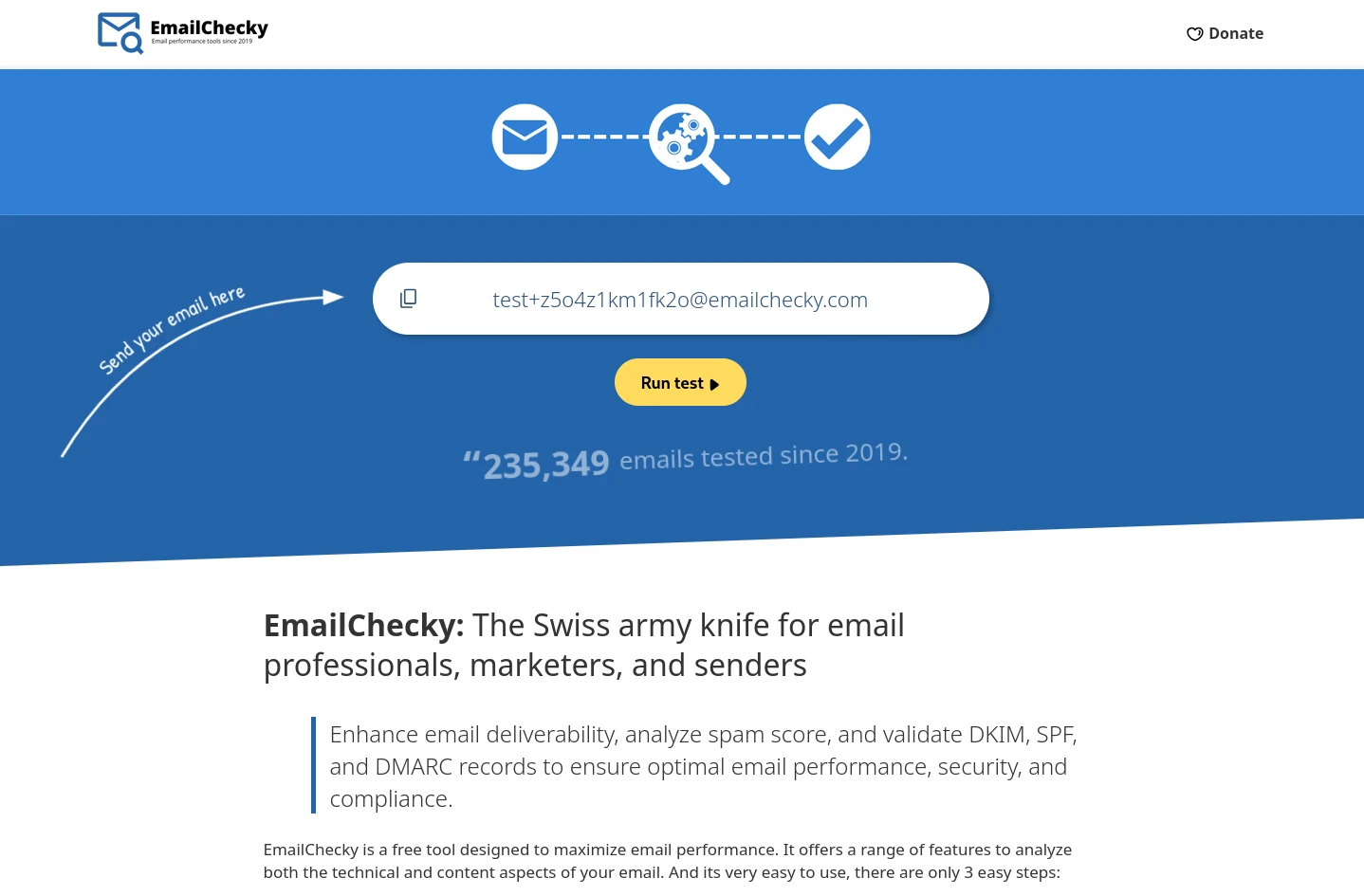
This is a very specific affiliate site of mine. The content is a free service — a web app that runs in the browser. It has little text and gets most of its traffic from referrals and backlinks.
Monetization is done through an affiliate product that's relevant or interesting to users, it is an email marketing tool. First, you need to analyze your audience and determine what products they're interested in. Only then can you find the best match for your site that will sell.
To find a good product, you can look for in-house affiliate programs or browse big affiliate networks to pick the right one for your site.
Promoting software as an affiliate is one of my all-time top tips. Software is incredibly lucrative to sell, as it often offers very high commission rates — and in some cases, lifetime commissions. It's truly a no-brainer to promote.
Top tips for more success with your affiliate site
Here are some tips to help you build better affiliate sites and get more success:
- Work in niches — before starting, know your topic and target audience.
- Become an expert — your site will do better if people see you as an expert. Create great content and show up on other niche sites.
- Use good hosting — don't skimp here. Solid hosting costs around €10/month and often includes multiple domains.
- Focus on great content — especially for niche sites, your content should be top-notch and cover the topic well. That's how you attract the right visitors who convert.
- Content beats keywords — don't obsess over keywords. Focus on useful content — that's what makes your site successful long-term.
- Promote your site — not promoting your site is a huge mistake. Without promotion, it'll take years to grow on its own.
- Give it time — every site needs time to "grow up." This varies from site to site. The biggest mistake is not giving it enough time, which is why many site owners fail
Conclusion
If you want to start an affiliate site or any type of website, always choose a niche that is as narrow as possible, but not so narrow that it limits your ability to grow. A good niche is specific but allows you to expand into subtopics of the niche. That is often a good choice.
Forget about broad market websites. They're dead. No one cares about them anymore. People are looking for specific information that they only find on websites that understand niche marketing.
Never be too aggressive or too hasty when monetizing the site. This may bring you short-term earnings, but in the long run, it will definitely hurt your business more than help it. Keep the site growing naturally — both traffic and earnings.